Queen Angelfish: 250 Gallons, and Nobody Knows Its Lifespan
Eighteen inches at adult size and 250 gallons before you start; that much can be sourced. How long one lives cannot. No reference records it, and the fifteen years the hobby quotes is a wild estimate from a single popular-science page, repeated back as though it were a tank figure.
| Scientific name | Holacanthus ciliaris |
|---|---|
| Family | Pomacanthidae (marine angelfish) |
| Origin | Tropical Western Atlantic & Caribbean |
| Adult size | Up to 18 in (45 cm) |
| Minimum tank | 250 gal minimum |
| Water | 72–82°F, pH 8.1–8.4, SG 1.020–1.025 |
| Reef safety | Not reef safe — FOWLR only |
| Diet | Omnivore — sponges, algae, tunicates, marine-based prepared foods |
| Temperament | Semi-aggressive, territorial |
| Lifespan | Not well documented; ~15 yr is an estimate, not a record |
The Queen Angelfish (Holacanthus ciliaris) reaches eighteen inches in the tropical Western Atlantic and Caribbean, and that size sets everything else: 250 gallons as a minimum, a Fish-Only-With-Live-Rock tank rather than a reef, and a diet built largely on sponges. Those numbers can be sourced. Its lifespan cannot — no reference records one, and the section below sets out exactly who says what.
Where this page comes from, because it should affect how much weight you give it: I have kept freshwater angelfish since 1990, and have never kept a marine angelfish or run a reef tank. The saltwater pages here are compiled from the reef-keeping literature and from the reported experience of keepers who have — organised as clearly as I can manage, but not watched. Weigh them against the accounts of people who have actually kept these fish.
Appearance & Identification
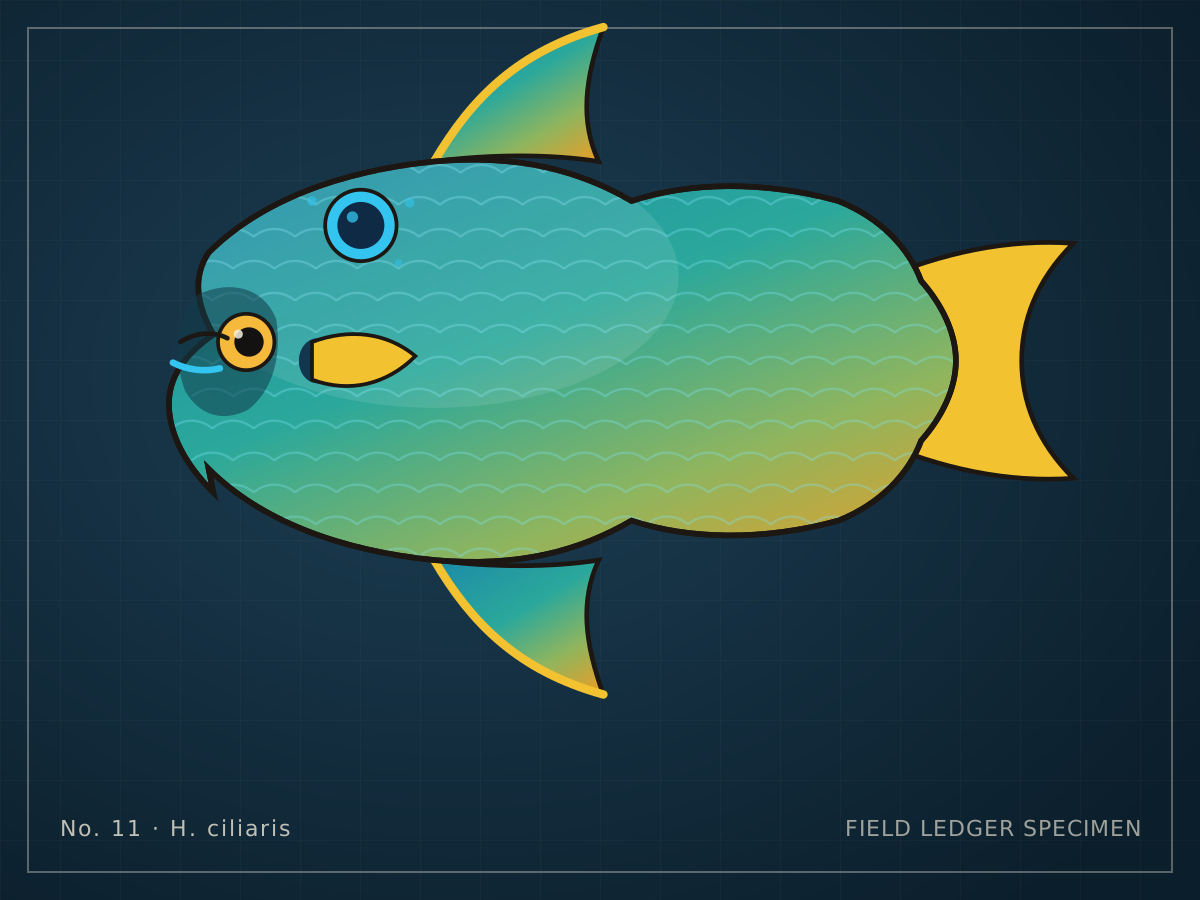
Adults feature an electric blue body with bright yellow scales and fins, and a characteristic blue "crown" outlined in black above the head that gives the species its royal name. Juveniles look different: dark blue bodies with vertical yellow stripes, before transitioning into the vivid adult coloration.
Adults typically reach 12 inches, but can grow up to 18 inches and weigh up to 3.5 lb. Their laterally compressed bodies let them maneuver through intricate coral structures. The adult's body is iridescent blue and green, often washed with yellow-orange, with brilliant yellow pectoral fins and a solid, vibrant yellow tail. The dorsal and anal fin edges are also trimmed in yellow.
The "crown" — a circular spot (ocellus), dark blue to black and ringed by an electric-blue halo — is the single most reliable feature for identifying an adult Queen. Juveniles are dark blue with 3–5 glowing light-blue vertical bars that fade as the crown and adult coloration emerge.
The most common confusion is with the closely related Blue Angelfish (Holacanthus bermudensis): the Queen has a blue-ringed black crown that the Blue Angelfish lacks; the Queen's tail is entirely bright yellow versus mostly blue with a thin yellow edge; and the Queen often shows a blue/dark blotch at the base of the yellow pectorals. The two species can hybridize, producing the Townsend Angelfish.
Habitat and Distribution
Ranges from Florida and the Gulf of Mexico south through the Caribbean Sea and along the coast of South America to Brazil. Adults frequent outer reef edges with moderate–strong currents at depths of 1–70 m, retreating to caves and crevices at night. Juveniles prefer shallower, protected areas such as seagrass beds and coral heads, where they often establish cleaning stations.
Behavior and Social Structure
Queen Angelfish may be solitary but are most often seen in bonded pairs defending territories spanning several thousand square meters; small harems of one male and several females occasionally form. Pairs are highly territorial and chase away competitors to secure access to sponges within their domain. Juveniles establish cleaning stations, removing parasites and dead tissue from visiting fish such as jacks, snappers, and groupers — a service that also feeds the juveniles.
Diet and Feeding Habits
The Queen Angelfish is a specialist feeder — primarily a spongivore, often over 90% of the diet, using brush-like teeth to nip encrusting sponges, which helps prevent sponges from smothering slow-growing corals. They also take tunicates, jellyfish/comb jellies, soft corals/anemones, and marine algae. In captivity, feed varied sponge-containing frozen diets, spirulina-based foods, chopped seafood, and high-quality pellets in small portions 2–3 times daily, including vitamin-enriched items.
Reproduction and Lifespan
Pairs are often long-term and monogamous. At dusk, pairs ascend and release eggs and sperm simultaneously (broadcast spawning) — a single female can release tens of thousands of eggs in an evening. Buoyant eggs hatch within 15–20 hours; larvae begin on yolk before feeding on plankton; after about a month drifting, juveniles settle on reefs with the dark blue, barred pattern.
How long one lives is the part nobody can tell you. FishBase records no maximum age for the species, the Florida Museum gives none, and the University of Michigan's Animal Diversity Web says plainly that the lifespan of the Queen Angelfish “has not been well documented”. The fifteen years quoted across the hobby traces to National Geographic, which gives it as an average in the wild — not, as it is usually repeated back, a figure for a tank. Treat any captive number you read, including the one this page used to carry, as a guess.
Queen Angelfish Aquarium Care
This species is recommended only for advanced aquarists due to its size, diet, and temperament.
- Tank size: a minimum of 250 gallons for a single adult, with ample swimming room.
- Water parameters: 72–82°F (22–28°C), pH 8.1–8.4, salinity 1.020–1.025. Ammonia and nitrite must be zero; nitrate under 20 ppm. Perform 15–20% water changes every two weeks, quarantine new specimens, and run a powerful protein skimmer.
Compatibility & Tank Mates
- Suitable: Tangs and surgeonfish, large wrasses, groupers, non-aggressive triggerfish, clownfish and other smaller community fish (in large tanks).
- Avoid: other large angelfish (highly territorial and often aggressive), small invertebrates, very timid fish that may be stressed by aggression.
Reef Safety: Not Reef Safe
The Queen Angelfish will graze on many corals (soft and stony), anemones, and clam mantles. Keep only in a Fish-Only-With-Live-Rock (FOWLR) aquarium.
Related Angelfish

Emperor Angelfish
Up to 15 inches, and 220 gallons minimum. The size is the decision, not the colouring.
Regal Angelfish
Ten inches, and 125 gallons before you start. Care, diet and where it stands on reef safety.
Reef Safe Angelfish
Which angelfish are reef-safe? Safest picks, with-caution dwarfs, and species to avoid.
Frequently Asked Questions
How big do Queen Angelfish get?
Queen Angelfish can grow up to 18 inches (45 cm) in length, making them one of the larger marine angelfish species.
What do Queen Angelfish eat?
They primarily eat sponges and algae in the wild. In captivity, they need sponge-based foods, algae, and marine pellets or frozen diets.
Are Queen Angelfish reef safe?
No, they are not considered reef safe as they nip at corals, clams, and decorative sponges.
What is the minimum tank size for Queen Angelfish?
A minimum of 250 gallons, and larger tanks are better for their long-term health.
How long do Queen Angelfish live?
Nobody reliably knows. FishBase and the Florida Museum record no lifespan for the species, and Animal Diversity Web says it has not been well documented. The fifteen years usually quoted comes from National Geographic as an average in the wild, not a captive figure.
Can Queen Angelfish live with other angelfish?
It is not recommended to keep them with other large angelfish due to territorial aggression.
Do Queen Angelfish change color as they grow?
Yes, juveniles are dark blue with yellow bars and gradually develop the adult's bright blue and yellow coloration with the crown spot.
Are Queen Angelfish good for beginners?
They are not ideal for beginners due to their large size, special diet, and territorial behavior. They suit experienced marine aquarists.