Flame Angelfish: Care, Size and Reef Safety
Brilliant fiery red-orange with striking black bars — one of the most iconic dwarf angelfish, with a famous “reef safe with caution” reputation.
| Scientific name | Centropyge loricula |
|---|---|
| Common names | Flame Angelfish, Flaming Angelfish |
| Family | Pomacanthidae (dwarf angelfish) |
| Reef safety | With caution — may nip corals and clams |
| Adult size | Up to 4 in (10 cm) |
| Minimum tank | 70 gal |
| Water | 75–82°F, dKH 8–12, pH 8.1–8.4, SG 1.020–1.025 |
| Diet | Omnivore, heavy need for marine algae |
| Temperament | Semi-aggressive |
| Lifespan | 5–7+ years with proper care |
| Origin | Tropical Pacific (Hawaii, Marshall Islands, Christmas Island) |
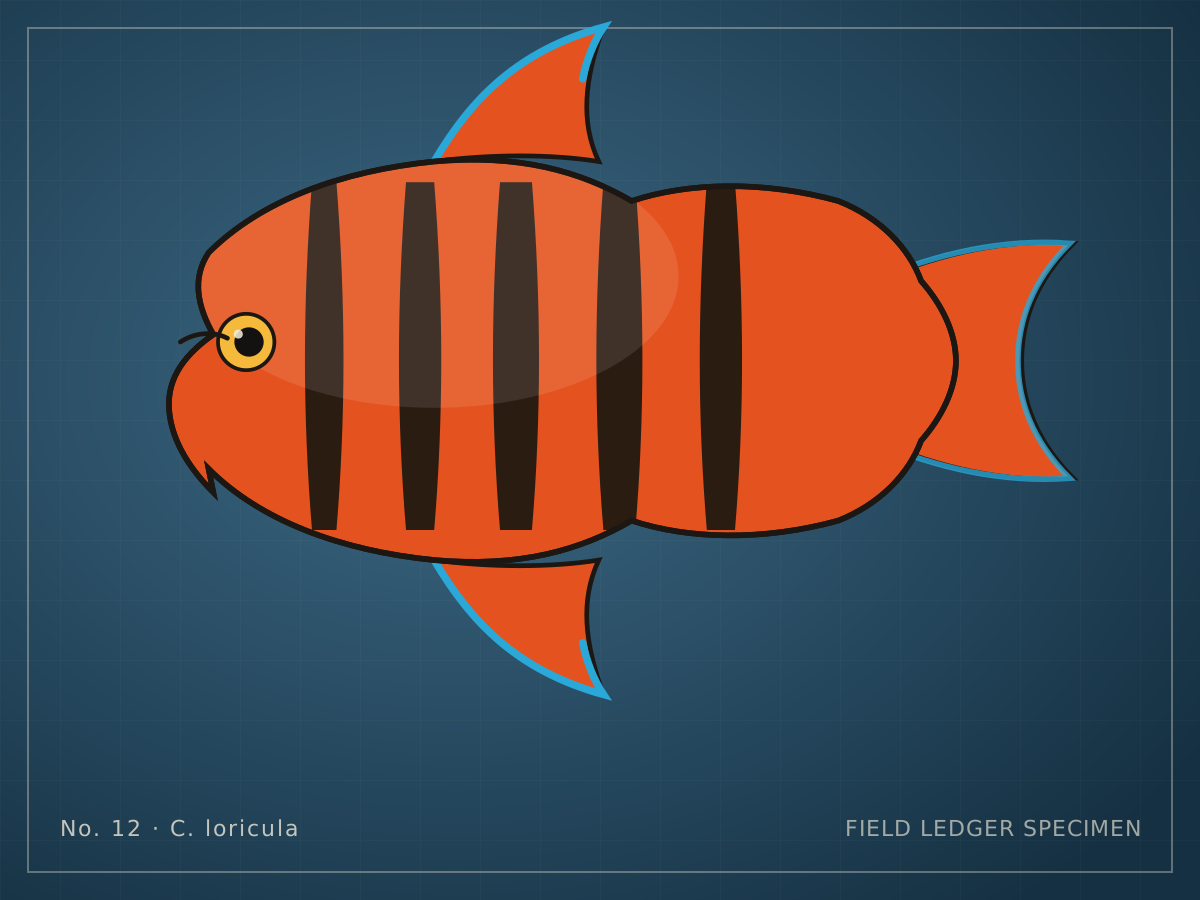
The Flame Angelfish (Centropyge loricula) is one of the most iconic and sought-after fish in the saltwater aquarium hobby, instantly recognizable by its brilliant, fiery red-orange body and striking black stripes. Its beauty is undeniable, but successful keeping requires understanding its specific diet, semi-aggressive nature, and its famous "with caution" reef-safe reputation.
Where this page comes from, because it should affect how much weight you give it: I have kept freshwater angelfish since 1990, and have never kept a marine angelfish or run a reef tank. The saltwater pages here are compiled from the reef-keeping literature and from the reported experience of keepers who have — organised as clearly as I can manage, but not watched. Weigh them against the accounts of people who have actually kept these fish.
What Is a Flame Angelfish?
A member of the Centropyge genus of dwarf angelfish, celebrated for packing the beauty of a large angelfish into a much more manageable size. Native to the reefs of the Pacific Ocean, its intense coloration and active personality make it a perennial favorite, though it requires a mature aquarium to thrive.
Appearance & Coloration
Its body is a blazing red or orange, overlaid with 4 to 5 vertical, thick black bars that vary in intensity, with the posterior edges of the dorsal and anal fins tipped in electric blue. Vibrancy and hue vary by collection location: Hawaiian and Christmas Island specimens typically show a deep, solid "lipstick" red, while Marshall Islands fish tend toward a brighter orange-red with thicker black bars.
Reef Safety: A Detailed Look
The official rating is reef safe: with caution. Flame Angelfish naturally graze on algae and microorganisms on live rock, and this grazing can sometimes extend to nipping corals and clam mantles.
- Higher risk: Large Polyp Stony corals, zoanthids, and especially the soft mantles of Tridacna clams.
- Lower risk: most noxious soft corals (like Leather Corals) and Small Polyp Stony corals are often ignored.
- Minimizing risk: keep the fish well-fed with plenty of marine algae, in a large, mature aquarium with ample live rock.
See our full reef-safe angelfish guide for a species-by-species breakdown.
Temperament & Behavior
Flame Angelfish are bold, active swimmers unafraid to explore the entire tank. They're semi-aggressive and can be territorial toward other dwarf angelfish of similar shape and color, so it's a golden rule to keep only one dwarf angelfish per tank unless the aquarium is very large (125+ gallons) with abundant rockwork. They're generally peaceful toward non-related species like tangs, clownfish, wrasses, and gobies.
Tank Requirements & Habitat
A mature, stable environment is key. A 70-gallon tank is the minimum for a single Flame Angelfish. Abundant live rock is the single most important requirement, providing hiding places and a constant food source as the fish grazes on algae and the organisms living on the rock.
Diet and Feeding
Flame Angelfish are omnivores that need a diet rich in vegetable matter: a high-quality marine angelfish preparation containing sponge matter and algae as the primary diet, supplemented daily with dried marine algae (nori) on a veggie clip to mimic natural grazing. Feed small amounts 2–3 times per day.
Breeding Flame Angelfish
Breeding is extremely difficult in the home aquarium and rarely accomplished. Flame Angelfish are protogynous hermaphrodites — all born female, with the dominant individual in a group able to transition into a male. Commercial breeding has become more common, providing hardier, sustainably sourced fish for the hobby.
Related Angelfish

Coral Beauty Angelfish
A four-inch dwarf that still wants 70 gallons. Care, diet and reef safety.
Regal Angelfish
Ten inches, and 125 gallons before you start. Care, diet and where it stands on reef safety.
Reef Safe Angelfish
Which angelfish are reef-safe? Safest picks, with-caution dwarfs, and species to avoid.
Frequently Asked Questions
Is the Flame Angelfish really reef safe?
It is rated 'with caution.' While many aquarists have success, there is always a risk that it may nip at LPS corals, zoanthids, and clam mantles. Keeping it well-fed with plenty of algae can help minimize this risk.
Can I keep more than one Flame Angelfish in my tank?
This is not recommended unless the aquarium is very large (125+ gallons). They are highly aggressive towards members of their own species and other dwarf angelfish.
Why is my Flame Angelfish always hiding?
While typically bold, a new Flame Angelfish may hide for several days as it acclimates. Persistent hiding in an established fish can be a sign of bullying from a tank mate or illness.
Does the Flame Angelfish need a lot of live rock?
Yes. Abundant mature live rock is essential. It provides crucial grazing opportunities for algae and microorganisms, which make up a large part of their natural diet.
What is the minimum tank size for a Flame Angelfish?
A single Flame Angelfish requires a minimum tank size of 70 gallons, to provide ample swimming space and grazing territory.