
Emperor Angelfish: Care, Size and Reef Safety
Bold blue, yellow, and black stripes make this Indo-Pacific reef fish one of the most iconic saltwater angelfish — with one of the most dramatic juvenile-to-adult transformations in the hobby.
| Scientific name | Pomacanthus imperator |
|---|---|
| Family | Pomacanthidae |
| Origin | Indo-Pacific reefs |
| Adult size | Up to 15 in (38 cm) |
| Minimum tank | 220 gal minimum |
| Water | 72–82°F, pH 8.1–8.4, SG 1.020–1.025 |
| Reef safety | Not reef safe |
| Diet | Omnivore: sponges, algae, marine foods |
| Temperament | Semi-aggressive, territorial |
| Lifespan | 15–20 years in captivity |
The Emperor Angelfish (Pomacanthus imperator) is one of the most iconic saltwater angelfish, admired for its bold blue, yellow, and black stripes that stand out in any reef environment. Native to the Indo-Pacific, it's a favorite among marine aquarists and divers for its striking colors and graceful presence — but its beauty comes with demanding care requirements suited to a dedicated, experienced hobbyist.
Where this page comes from, because it should affect how much weight you give it: I have kept freshwater angelfish since 1990, and have never kept a marine angelfish or run a reef tank. The saltwater pages here are compiled from the reef-keeping literature and from the reported experience of keepers who have — organised as clearly as I can manage, but not watched. Weigh them against the accounts of people who have actually kept these fish.
The Stunning Transformation: Juvenile vs. Adult
For years, juveniles and adults were believed to be two entirely separate species. A juvenile Emperor is a spectacle of electric blue and white — a deep, dark blue body covered in concentric white and electric blue rings, starting as a small circle near the tail and expanding outward. As the juvenile grows (typically reaching 3–5 inches), the rings gradually morph into the bold, horizontal stripes of the adult: bright yellow and vibrant blue stripes, a dark blue or black facial "mask" edged in blue, and a solid bright yellow tail fin. This transformation can take anywhere from six months to over two years.
Natural Habitat and Origin
Found throughout the Indo-Pacific, from the Red Sea and East Africa to the Hawaiian and Pitcairn Islands, at depths of 3 to 100 meters. Juveniles are shy and reclusive, hiding under ledges or within reef holes, while confident adults patrol coral-rich lagoons and outer reef slopes in the open.
Diet and Feeding
In the wild, Emperor Angelfish feed mainly on sponges and tunicates — replicating this is key to long-term health.
- Marine algae and sponges: a high-quality angelfish formula containing marine sponge, plus dried nori clipped to the tank side.
- Frozen foods: mysis shrimp, brine shrimp, and krill, enriched with vitamins.
- Pellets and flakes: quality marine omnivore formulas, but not as the sole food source.
- Live foods: occasional live brine shrimp to stimulate natural feeding response.
Feed small amounts 2–3 times per day. A well-fed angelfish is healthier and slightly less likely to pick at corals in a reef environment.
Aquarium Setup: Tank Requirements
- Tank size: a single adult requires a minimum of 220 gallons, at least 6 feet in length. A smaller tank leads to stress, stunted growth, and increased aggression.
- Filtration: a high-quality, oversized protein skimmer is mandatory, plus generous live rock (1–1.5 lbs per gallon) for biological filtration.
- Aquascape: plenty of caves, overhangs, and swim-throughs, especially important for shy juveniles, alongside ample open swimming space.
- Water parameters: temperature 72–82°F (22–28°C), pH 8.1–8.4, salinity 1.020–1.025 SG, ammonia and nitrite 0 ppm, nitrate under 20 ppm. Regular water changes (15–20% bi-weekly) keep nitrates low and replenish trace elements.
Temperament, Behavior, and Tank Mates
Emperor Angelfish are semi-aggressive and become highly territorial as adults, especially toward other angelfish. Keep only one per tank unless the system is massive (300+ gallons) with simultaneous juvenile introduction.
- Suitable tank mates: large Tangs (Naso, Sailfin), larger Wrasses (Clown, Coris), Triggerfish (with caution), Rabbitfish, Groupers.
- Avoid: other large angelfish (Queen, Blueface), small or slow-moving fish (gobies, firefish, clownfish), sharks and rays.
Is the Emperor Angelfish Reef Safe?
No, it is not considered reef safe. Emperor Angelfish are known nippers that browse live rock for food, and this often extends to corals and invertebrates — high risk to Large Polyp Stony corals, soft corals like zoanthids, and clam mantles, with somewhat lower risk to Small Polyp Stony corals but no guarantee. See our full reef-safe angelfish guide for the complete risk breakdown.
Breeding the Emperor Angelfish
Breeding in a home aquarium is virtually impossible. Emperor Angelfish are pelagic spawners, releasing eggs and sperm into the water column for external fertilization — a process, combined with specific environmental triggers and the difficulty of raising larvae, that limits successful breeding to commercial aquaculture facilities.
Common Health Issues
Like other marine angelfish, the Emperor is susceptible to ectoparasites: Marine Ich (Cryptocaryon irritans), with small white spots on body and fins, and Marine Velvet (Amyloodinium ocellatum), a more deadly parasite appearing as fine gold dust. Quarantine all new fish in a separate hospital tank for 4–6 weeks before introducing them to your main display.
Related Angelfish
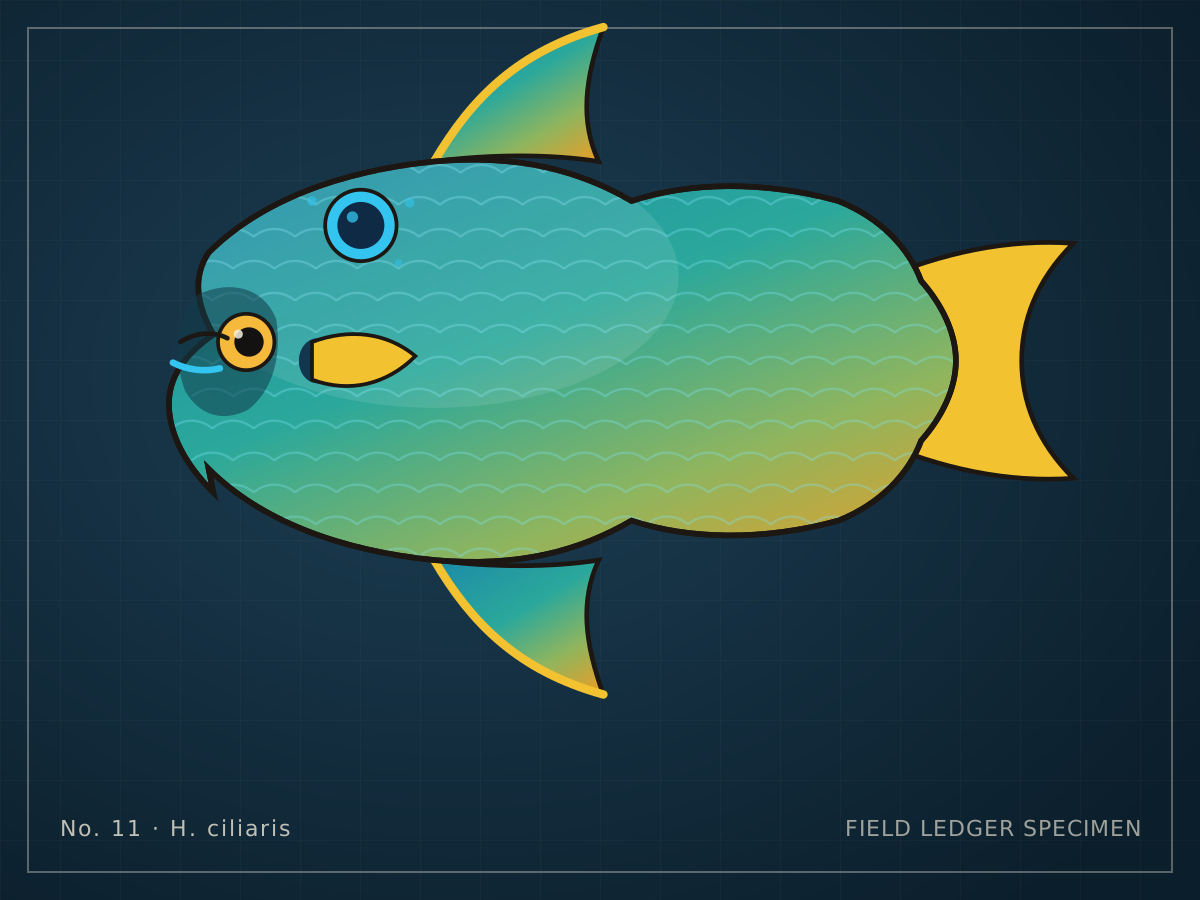
Queen Angelfish
Vibrant blue and yellow body with a distinct crown-like spot.
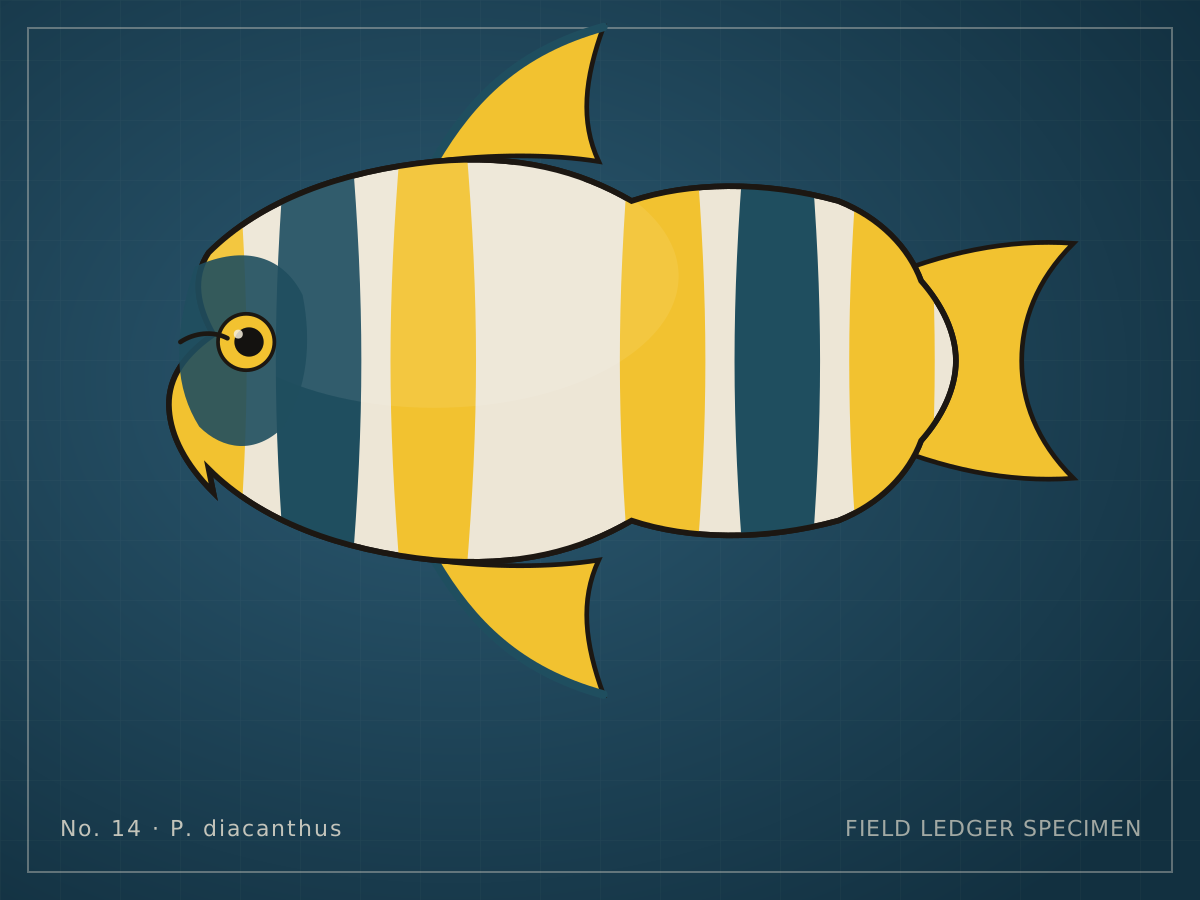
Regal Angelfish
Bold yellow, blue, and white stripes. Requires a large, stable marine tank.
Reef Safe Angelfish
Which angelfish are reef-safe? Safest picks, with-caution dwarfs, and species to avoid.
Frequently Asked Questions
How big do Emperor Angelfish get?
Adults can reach about 15 inches (38 cm).
What tank size is recommended?
A minimum of 220 gallons, with ample swimming space and rockwork.
Are Emperor Angelfish reef-safe?
They are not considered reef-safe and may nip at corals and some invertebrates.
What water parameters do they need?
Temperature 72–82°F (22–28°C), pH 8.1–8.4, salinity 1.020–1.025 SG, with stable high-quality filtration.
Are they aggressive?
They are semi-aggressive and territorial, especially as adults; keep one per tank or with robust tank mates.
How long do they live in captivity?
With excellent care they can live 15–20 years.
How do juveniles differ from adults?
Juveniles show concentric blue-and-white rings; adults transition to bold yellow, blue and black stripes with a facial mask.
Should the tank be mature before adding one?
Yes — introduce to a well-established, stable marine system (typically 6+ months) to ensure robust biofiltration and algae growth.